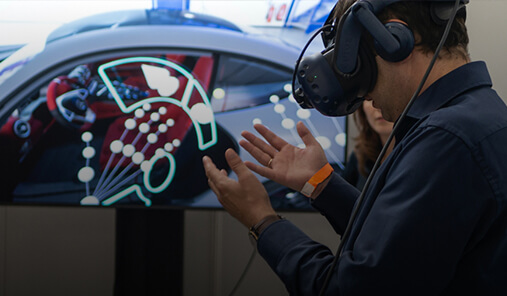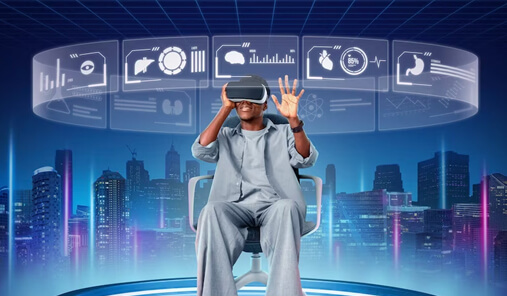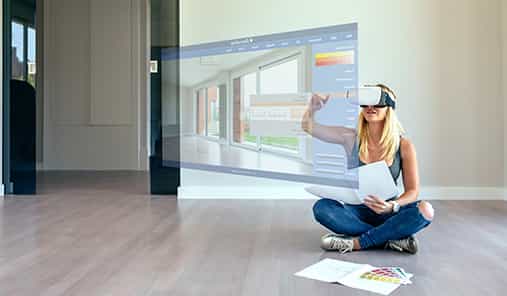

By enabling real and digital objects to interact in real time within a shared environment, mixed reality (MR) creates a bridge between the real and virtual worlds. In contrast with Augmented Reality, which overlays digital elements on the real world, and Virtual Reality, which immerses users in an entirely digital world, Mixed Reality (MR) combines both, allowing users to interact with both digital and physical objects just like they were in the same space.
Through MR, real and virtual objects can constantly interact. This means virtual elements can be seamlessly placed and anchored in the real world. This indicates that virtual objects can be placed in the real world. They can interact with lighting, shadows, as well as other real-world factors. Real-world objects can even cover it.
By allowing a deeper integration of digital content into the physical environment, MR provides a more immersive experience than AR. This makes interactions feel more natural and intuitive.
With MR, customers can engage with products and services in an entirely interactive way. With MR, customers can see how the products look in the real environment. This builds a strong understanding and a deeper connection with the brand.
Users can practice skills and scenarios in a safe and controlled environment. MR simulations help create realistic training environments to support this.
MR brings real-time information and guidance in the physical environment, optimizes operations and lowers the risk of errors, and improves efficiency in industries like manufacturing, healthcare, and logistics.
Posted by Admin